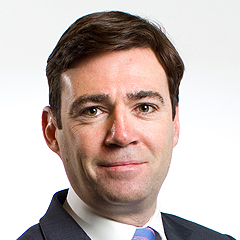
Caroline Voaden is the Liberal Democrat MP for South Devon, and has been an MP continually since 4 July 2024. She currently undertakes the role of Liberal Democrat Spokesperson (Schools).
“The NFU is concerned that the £240 million allocated for new sustainable farming incentive agreements in 2026 does not match the scale of farmers’ environmental ambitions and will not allow all farmers with expiring agreements a reasonable opportunity to access ongoing environmental land management schemes funding. How will the Government support farmers like mine in South Devon, who are keen to protect the environment while producing food but are unable to secure a new SFI agreement under this limited budget, to continue their valuable environmental work?”
Backed 1 motionSpoke in 13 debatesAsked 27 questions
Education
Outdoor Education
“I beg to move, That leave be given to bring in a Bill to require that all children in primary and secondary education spend a minimum of thirty minutes a day outdoors during school hours; to require primary and secondary schools to provide a minimum of one lesson of teaching each week outdoors; to require that every child be offered at least one outdoor education experience during primary school years and at least one such experience during secondary school years; and for connected purposes. Modern medicine is always looking for the next big discovery to change lives, yet we are missing out on the cheapest, easiest and quickest way to turn around the vicious mental health crisis we see in our children and young people—a crisis that affects their ability to learn, to achieve, to work and to live a healthy and happy life. The answer is outdoor learning. It is staggering to read that the amount of time children spend outside has fallen by 50% in a single generation, that children roam just 300 metres from home and that a fifth of children in the most deprived parts of the country never spend meaningful time outdoors. Research shows that being out in nature makes children happy, that children who spend time outside care more about nature and that unstructured, risky, nature-based play outdoors improves confidence and cognitive development. Research funded by the Department for Environment, Food and Rural Affairs through Natural England found that 95% of children found outdoor learning made lessons more enjoyable, and that 90% reported an improvement in students’ engagement with learning and an increase in student health and wellbeing. These figures are staggering, and they deserve to be taken seriously. This Bill is about improving the lives of our children and young people and, by using outdoor learning, raising a generation of people who will care more about nature, which is the one thing we know will protect us from the most devastating effects of climate change. Andy Jasper, the chief executive officer of the Eden Project, told us last week on a brilliant parliamentary visit that there simply will be no future without nature. Shockingly, a third of children never have school lessons outdoors, yet in many schools in South Devon outdoor learning is a regular weekly part of the curriculum, in playgrounds, school veg gardens, parks and little bits of woodland. Children who live the furthest distance from green or open outdoor spaces spend more time on screens and have poorer mental health than children living in close proximity. A lack of time spent outdoors is linked to childhood health disorders such as attention deficit hyperactivity disorder, obesity and depression. However, it is not just kids from the inner city who are missing out on the benefits of the great outdoors. In my beautiful constituency of South Devon there is a stark disparity that might surprise many in this House. I often hear of children who live just a couple of miles from our stunning beaches but have never been to them. There are few buses to the beach and the parking costs are a serious barrier for some. This mirrors research showing that young people in communities all around the UK coast view the beach as “not for them”, but for visitors and tourists. This is why taking kids outdoors to do lessons at school is so vital to introducing them to the idea of being in nature and developing a familiarity with the great outdoors. There is not a subject on the curriculum that cannot be enhanced by outdoor learning. The Fibonacci sequence is seen in the petals of a flower, the scales of a pine cone and the seeds of a sunflower. English, science, music, poetry, drama and geography can all be enhanced by teaching outside. As one child said: “When we were on the field trip, we did maths, English and science, but it was like we didn’t realise we were doing it”. For teachers, that is pure magic. Totnes St John’s Church of England primary school is located in a large housing estate and has a 44% special educational needs and disabilities cohort. Its brilliant example could be replicated by schools up and down the country. The headteacher told me that her pupils regularly use the school’s outdoor spaces to support emotional regulation, and that this is incredibly effective. She said: “They thrive outdoors, so we take as much learning as possible into our grounds. Delivering learning in this experiential, immersive and hands-on way makes it more purposeful, as well as easier for children to understand and retain.” The school has adapted its uniform to enable children to be outside as much as possible, regardless of the weather—all the children have wellies in school. At Blackawton and East Allington, children have a dedicated afternoon of forest school and an hour of outdoor PE every week. Headteacher Liam Fielding said: “The opportunities to explore, problem solve, take risks, work collaboratively and simply spend time outdoors have a significant impact on children’s confidence, resilience and wellbeing. For some children, particularly those who may struggle within a traditional classroom environment, outdoor learning provides a different opportunity to succeed, develop relationships and build self-esteem. We regularly see children return to the classroom calmer, more focused and more ready to learn after spending time outdoors—phonics in the mud, maths with sticks”. I was thrilled to be able to connect Harbertonford Church of England primary school with volunteers from Force 4 Nature, who turned up and built raised veg beds in the playground so the pupils can learn how to grow healthy food, which they can eat in school. This kind of learning is straightforward and can engage those who struggle in a traditional classroom environment; the child who can be disruptive in the classroom is hard to spot once outside with the whole class. However, this takes confidence from school leaders and teachers, so it is crucial that outdoor learning features in continuing professional development and training. I want a curriculum and assessment review that includes outdoor learning, which Ofsted should include as a plus when assessing how schools are performing. Any school in the country can open its doors and take learning outside. To take it one step further is the holy grail: the outdoor residential. I still remember the school trips I enjoyed at the Lagganlia centre, near Aviemore—the experiences have stayed with me for many decades. However, we are still waiting to see Labour’s access to nature Green Paper, which the Government promised in this Parliament. That creates uncertainty for those who deliver programmes that provide such invaluable opportunities. The Government have also decided not to renew the generation green programme, which provided access to nature, through structured outdoor learning, residentials, farm visits and more, to over 125,000 children, including 26,000 from the most disadvantaged communities. The recent Milburn review is clear that mental health has become a primary driver of youth disengagement, not a secondary consideration. Rising anxiety, neurodiversity and long-term health conditions are reshaping who participates in post-16 education. If we want to help our young people achieve more, getting them outside is a good place to start. Yes, residentials cost money, but let us talk about the return on investment. DEFRA-funded research from the University of Cumbria demonstrates a social return on investment of £4.32 for every £1 spent on outdoor education as part of the curriculum. The Scottish Government have already acted on this, and we should too. Outdoor residentials can literally change lives. They pull kids out of their comfort zone and teach them that they can do things they thought were impossible. Activities teach teamwork and problem solving, improve self-belief and build friendships. Those are the skills that will give children the resilience to help them cope with all the stuff that life throws at them as they grow up. They also offer space to connect with peers and teachers in a new way, offering valuable side-by-side moments. “It’s like being in Minecraft” is a phrase often heard as the kids walk through the woods near Beesands in South Devon. For many children who come here to experience the great outdoors on a school residential, this will be the first time they have set foot in a wood. They might be nervous of sitting on the grass, or find it hard to walk down a steep grassy field towards the sea, but all these little moments are teaching them resilience. Pete and Andrea Moore both gave up traditional teaching jobs to open the brilliant Forest and Beach outdoors centre, such was their passion for teaching children the value of experiencing the outdoors, not just seeing it on a screen. Kurt Mockridge, who runs Grenville House outdoor education centre in Brixham, told me of kids who come to his centre from a primary school just the top of the hill but who have never been down to the beach or in the water that is right on their doorstep. Parents who do not have the familiarity, confidence or time may struggle to take their kids out. That is why such trips are so crucial, especially for those from more deprived areas. For many young people living in urban areas, their only realistic opportunity to experience nature comes through residential outdoor learning, where they are taken out of their local environment altogether. By building their confidence in the outdoors, we instil in them a respect for, and understanding of, nature, which will be crucial as we face the challenges of a changing climate. We simply cannot expect future generations to nurture our planet if they do not understand the wonder of nature. For the mental health and wellbeing of our children and young people, for the enhanced learning outcomes that they will gain, for the joy of learning and for the future of this planet that we call home, I commend this Bill to the House. Question put and agreed to. Ordered, That Caroline Voaden, Tim Farron, Dr Roz Savage, Dr Danny Chambers, Maya Ellis, Sir Julian Lewis and Chris Law present the Bill. Caroline Voaden accordingly presented the Bill. Bill read the First time; to be read a Second time on Friday 16 October, and to be printed (Bill 111).”