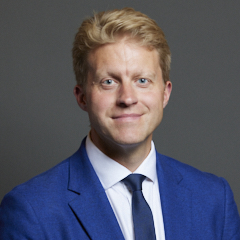
Dr Ben Spencer is the Conservative MP for Runnymede and Weybridge, and has been an MP continually since 12 December 2019. He currently undertakes the role of Shadow Minister (Science, Innovation and Technology).
“I start by thanking the Chair of the Science, Innovation and Technology Committee and its entire membership for the publication of a very interesting and timely report. Business, academia and the whole tech sector needs clarity, in some ways more than anything else. Does the Chair share my concerns, which are stated quite well in the report, that “The government has repeatedly outlined that building sovereign capability is a ‘critical priority’ for the UK but has not been clear on exactly what this means or how it might be measured”? There are lots of different definitions of sovereignty being bandied around, which mean lots of different things in different contexts. Does the hon. Lady agree that we need some clarity on what exactly it means in this sector when we use the word “sovereignty”?”
Spoke in 14 debatesAsked 23 questions
Government Finances
Railways Bill: New Clause 48 - Tax consequences of transfer schemes
“I rise to speak to new clauses 29 to 32 and amendments 65 to 67, tabled in my name. My mission is to keep Runnymede and Weybridge moving. Rail and transport are important to us: we are situated within the London commuter belt, one 10th of the M25 runs through my constituency, along with the M3, and Egham is five miles from Heathrow. The constituency has companies that were established there because of our transport connections, but also those that deliver services linked to transport, such as logistics. I have tabled a series of amendments with a view to improving services and transport, not only in my constituency but across the country, as we have heard from colleagues—I thank my hon. Friends the Members for Broxbourne (Lewis Cocking) and for Bridgwater (Sir Ashley Fox) for referring to my amendments in their speeches. If the amendments are not pushed to a vote, Madam Deputy Speaker, I hope at the very least that the Minister will be minded to support them, not least in the spirit of improving the rail service across the country, and perhaps to stop having to listen to me rattle on about the level crossings in Egham and other problems in my constituency. A key strength of the Bill is that, as several Ministers have said, the buck stops with them. I believe the Secretary of State said that the buck stops with her, and when I met Lord Hendy, he said that the buck stops with him. That is a key improvement on the previous system, in which South Western Railway and Network Rail were separate, because we now have a clear person and organisation to go to in order to raise issues or problems about the rail infrastructure in our constituencies. New clause 29 would give the Secretary of State the power to direct GBR to co-operate with transport authorities to ensure the effective operation of transport networks and to reduce disruption. It does not make sense to have railway engineering works at the same time as local motorways or arterial roads are closed, or to have multiple pockets of utility works around Chertsey, where I live, all taking place at the same time. We need better co-ordination among all bodies to ensure, first, that such works do not all happen at the same time, and secondly, that if a utility company excavates a road to work on the water supply, for example, necessary work to fix the gas or electricity supply or to install broadband takes place at the same time. New clause 30 relates to an accessible rail strategy. Accessibility issues affect many stations across the country and, frankly, it is scandalous that we have such accessibility problems. In my constituency, there is a focus on the Weybridge lifts, which I have been going on about for many years, as they frequently break down, affecting many passengers across Weybridge. I would like to give a shout-out to Tim Blanchard, a wheelchair user who has led a campaign to try to improve the Weybridge lifts. I am promised that they will be replaced this summer, which will finally see an end to the Weybridge lift saga, but we need more, and I hope the accessible rail strategy will prevent colleagues from having the same problems that we have had locally.”