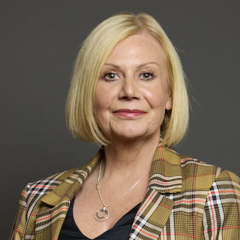
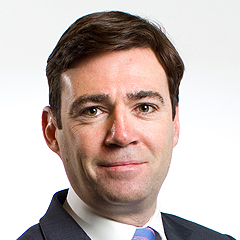
“This month, Ayrshire college won the UK training provider skills champion award at the Enginuity skills awards, for its work in development, engineering and aerospace. Engineering and aerospace remain critical for Ayrshire’s economy, and that national recognition demonstrates the vital role that further education colleges play in developing our young workforce. Colleges across Scotland continue to face financial pressures, despite delivering exactly the kinds of outcomes that Governments want. Will the Leader of the House make time for a debate on the importance of investing in further education colleges across Scotland?”
Spoke in 16 debates
Energy
Energy Security
“I have cut my speech down so much I do not know if I can fill five minutes, Madam Deputy Speaker. In the King’s Speech, His Majesty set out a clear and sober assessment of the challenges facing our country. He reminded us that energy independence is now a matter of national security, not just environmental ambition. His Majesty warned that recent events in the middle east have once again shown how global instability can reach directly into the homes of families across the country. That is why the Government have committed themselves to an energy independence Bill designed to scale up home-grown renewable energy and protect living standards for the long term. If we are to deliver on the significant commitment to build an energy system that is secure, clean and resilient, then we must learn from the evidence. The reality is that we will not win the argument for clean climate action unless people feel the benefit. Energy independence cannot be something that happens to communities; it must be something that happens with them. The transition of clean energy is already shaping our energy landscape. Renewables are reducing the number of hours when gas sets the price of electricity. New technologies are emerging as the backbone of a modern energy system, and the grid, long overdue for investment, is finally being reimagined for the 21st century. Faced with decades of deindustrialisation, communities like Ayr, Carrick and Cumnock need to see and feel real benefits, such as lower bills, good jobs, and investment in local services, otherwise support for the transition will erode—and if support erodes, we risk losing the wider public argument on climate change altogether. In Scotland, delivering those real benefits means Governments working together. The clean power mission is an objective shared by both the UK and Scottish Governments; it is important to acknowledge constructive co-operation, and encourage more of it where possible. As we debate energy security, we must place community benefit at the heart of our approach, not as a voluntary gesture or token payment, but a core principle of how we build the energy system of the future. In Ayr, Carrick and Cumnock, the 9 Community Council Group administers large amounts of community benefits, with over 60 young apprenticeships, alongside other fantastic community support, creating an ongoing legacy to my communities. I invite the Minister to attend a meeting with that group. However, we must go further. Community ownership—giving local people a real stake in the energy produced on their doorstep—should be a core feature of the transition. When communities share in the profits, they share in the purpose. When they have a voice, they have a better reason to support change, both locally and nationally. It is about not just fairness but effectiveness, because the fastest way to lose public trust is to impose changes without their consent. The fastest way to build trust is to ensure that communities are partners and not bystanders. Finally, I will touch on the Scottish Government’s continued opposition to new nuclear development in Scotland. Their stance was clearly shaped in a different political moment, but today it means that Scotland risks standing apart from what the King’s Speech rightly called “a new era of British nuclear energy”. By ruling out nuclear energy entirely, Scotland risks losing out on long-term skilled jobs and major inward investment. At a time when the UK is moving to expand nuclear, Scotland risks being left behind, missing opportunities that could support communities and contribute to the secure, clean energy mix that we need for decades to come.”
Spoke in 5 debatesAsked 2 questions
In Parliament
Selected from their parliamentary record
VOTED AYE9 Jul 2025
Universal Credit and Personal Independence Payment Bill Committee