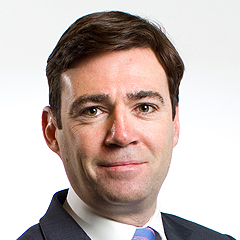
“At the outset of this Adjournment debate on ceramics, I declare my interest as a member of the GMB trade union and chair of the all-party parliamentary group for ceramics, for which the secretariat is provided by Ceramics UK. I also want to place on the record the support that has recently been given to the sector under the stewardship of my right hon. Friend the Business Secretary. The £120 million that has been provided is a massive boost to a sector that had all but been forgotten and was worried that it was on a managed decline towards the end of a ceramics manufacturing base in the UK. We know that there is work to do with that money. The sector and the unions are coming together as we speak, and they are working with the Business Secretary’s officials to make sure that every penny of the money that he and the Chancellor of the Exchequer have been able to find for us goes towards protecting jobs, safeguarding manufacturing and making sure that the sector has a viable future, as it is so important to the constituency that I represent.”
Spoke in 21 debatesAsked 55 questions
Energy
British Industry Supercharger: Ceramics
“I believe my hon. Friend is referring to the Copeland plate that he saw, which was made in the old Copeland factory not far from my current constituency office. Again, that demonstrates the soft power that we have in the export market. Mr Speaker himself commissions ceramic products from Stoke-on-Trent as part of the giftware he hands out when he receives dignitaries from around the world. I am proud that things made in Stoke-on-Trent find themselves gracing palaces around the world. The Minister will know, however, that it has been a tough time for ceramics. Ceramics is predominantly a gas-based industry, and the cost of gas power is almost three times what it was in 2019. In 2019, we were looking at about 40p per therm; today, it is 116p per therm. I genuinely appreciate that the Minister does not control the international wholesale gas price and, as I have on occasions disagreed with the Opposition, drilling will not necessarily bring down that price. However, it is nevertheless a fact that it costs three times as much today to fire a product, whether it be a brick or a plate, as it did in 2019. It has been estimated by the TUC and GMB through their “Save British ceramics” policy document that 78% of the heat capacity needed to meet the ceramics manufacturing base in this country could come from electrification. It is not impossible to electrify. However, the Minister will also know that electricity prices in this country are significantly higher than in our European counterparts. That is all before we get on to the issue of the illegal dumping in this country of products that are made using subsidised Russian gas through non-EU countries. We do have a genuine problem with the competitive nature of the products that we make based on the energy that they consume. That is where we have been talking to the Secretary of State and the Minister for Industry about the supercharger scheme. We were disappointed that ceramics in their entirety were not included in the British industrial competitiveness scheme. We welcome the fact that small technical ceramics have been included—that step has been genuinely welcomed across the sector. The pitch we want to continue to make today is for the rest of the sector to be considered for the supercharger scheme as part of the ongoing consideration that the Department is running. There is a perversity to the supercharger scheme. Industries that are part of it receive all the benefits of being in it, receiving discounts on some of the policy costs and some of the transmission costs; industries that are not in it not only do not receive those benefits, but actually pay towards those that are part of it. Being out of the scheme therefore means paying for the industries that are in it. We have the perverse nature of energy-intensive industries like ceramics subsidising the energy costs of energy-intensive industries such as steel, some of the chemical sector and some of the metal sector. That is not something the Government have done by design; it is just the way the system has developed over time, by trying to make it cost neutral to the Government and passing those costs on to higher energy users. That is unfair—it is. It means that the costs of the electricity that could be used in factories around Stoke-on-Trent and around the UK are higher because organisations that use as much energy as we do are getting a subsidy and a discount. That needs to be changed. The sector does want to move towards electrification. We really welcome the fact that part of the £120 million secured by the Secretary of State was for capital costs to allow factories to move towards heat recovery technology and towards electrification of processes, where possible. However, the challenge is that while the electrification process may be covered in some of the capital costs, the running costs of the electric process, compared with the gas process, means that the savings are marginal and, in some cases, it is more expensive. I know that the Secretary of State is working as quickly as he can, and I know that the Government say they are working at pace on trying to bring down those industrial electricity costs, but at the moment that is an impediment to realising some of the good work that we could do as a result of the investment that the Secretary of State has brought forward. I would just ask the Secretary of State to think about which of the SIC codes he would consider including in the supercharger scheme. Given that we have an ambition in this country to build 1.5 million houses, ensuring that every community has homes that my constituents and the constituents of my colleagues can move into must be part of that. If product code 23320—bricks and tiles in baked clay—could be included, that would benefit manufacturers in your constituency, Madam Deputy Speaker, and in the constituency of my hon. Friend the Member for Newcastle-under-Lyme (Adam Jogee). Manufacturers in the constituency of my hon. Friend the Member for North West Leicestershire (Amanda Hack), home to Ibstock, would also benefit from that. Given that we want to try to encourage house building, this seems like an absolute no-brainer. There are also issues around product code 23200, which are refractory products. As I have said, to make steel in this country, refractory-grade ceramics that can withstand the intense heat of that process are needed. At the moment, we are becoming dependent on potentially importing those sorts of ceramics into the UK in order to make steel. Given that we are putting a significant amount of money into being able to increase the production of steel in this country because of our sovereign capability demands, it makes absolute sense that we insulate the supply chain for that process, which includes refractory-grade ceramics. Again, including those manufacturers in the supercharger scheme would be a huge benefit to them and make us less dependent upon imports. Given the geopolitical instability that we face, being able to do this by ourselves in our own country makes absolute sense. On house building, every house needs some form of bathroom. If my hon. Friend the Member for Lichfield (Dave Robertson) were here, he would talk about Armitage Shanks and the famous sanitaryware that it makes. Product code 23420 is ceramics and sanitaryware. Before my hon. Friend the Member for Newcastle-under-Lyme tries to make a further intervention, I acknowledge that in his constituency, he has Silverdale Bathrooms, which makes sanitaryware. We should be supporting domestic manufacturers in this country to build the houses that we need. Without that support, we become dependent on imports. Finally, a product code that is close to my heart: 23410 —the ceramic household and ornamental object. I appreciate that including it in the scheme is a harder sell because of the strategic importance of those products to the country, but I say to the Secretary of State that one of the programmes that this Government have quite rightly introduced is Pride in Place, which is about saying to communities, “We know who you are, and we are proud of what you do.” When he visited Emma Bridgewater, he saw the pride on the faces of the workers who make the mugs, plates and tableware—and he had a go himself, and was very good. There is a sense of identity in having an industry reflected in a community, and it being supported and helped. While there may not be an immediate economic argument for the inclusion of tableware and giftware in the supercharger scheme, there is undoubtedly an argument about community identity and pride in place. This is about protecting jobs in communities like mine, which have lost so much over many years of de-industrialisation, while simultaneously saying to the thousands of workers who make the things that we eat off, give to our friends, and buy for weddings and birthdays, “We recognise the important social value of what you make and your contribution to the colour and joy of our lives.” I think that is a powerful argument that shows that ceramics should included in the supercharger. This is not a case of the sector simply asking for a handout. I think the Secretary of State would accept that the sector is doing what it can to decarbonise, and recognises that decarbonisation does not mean deindustrialisation. It recognises that it has to do more on heat recovery, and to ensure that it can sustain itself. The funding we have received has been an incredible benefit to the sector. The next step, to ensure that we go from surviving to thriving, is including the sector in the supercharger. I hope when the Secretary of State is able to make announcements about the review, which we hope is coming soon, he will lift the hearts of all the workers he met at Emma Bridgewater by saying, “You’re in the scheme, and we’ve got your back.””