FAQsTermsPrivacyContact
State Logo
StateConstituenciesRepresentative
Back to Dewsbury and Batley
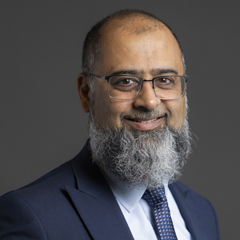
Iqbal Mohamed

Iqbal Mohamed

Independent MP for Dewsbury and Batley

Iqbal Mohamed is the Independent MP for Dewsbury and Batley, and has been an MP continually since 4 July 2024.

Share
Website

Seat status

Safe

Percentage of votes

18.21%

Recent swing

N/A

Party

Independent

Top donors:

International Centre of Justice for Palestinians (ICJP) (£40,000)

Doha Forum (£6,300)

Share donors

Explore what Iqbal is advocating for

Filter by topic

Business and Trade

Israeli Settlements: Trade Ban

“I thank my Yorkshire colleague the hon. Member for Sheffield Central (Abtisam Mohamed) for securing this debate, and for introducing it with the passion and power she did. Every single pound that goes from Britain to Israel is in one way or another helping Israel perpetuate its illegal occupation and apartheid system against the Palestinian people. Just this week, Haaretz reported that Israeli nationalist crime in the west bank is up by 560% since 2019, according to official police data. We know that the vast majority of the crimes by these terrorist settlers go unreported and unpunished, so if the percentage increase is officially 500-plus, it will actually be in the thousands given the crimes that will have gone unreported. These settlements are illegal colonies. For years, Ministers have stood at the Dispatch Box and rightly described these “settlements” as illegal under international law—this Government have done so more times than I can count—yet the condemnation rings hollow. If settlements are illegal, why are we still treating their products as legitimate? Every shipment from a settlement carries a human cost in the displacement, deprivation of income and death that it constitutes. It is the economic bedrock of a system of apartheid. Up to 110,000 Palestinian families rely on the olive harvest as their source of income. For generations, olive trees have sustained communities economically and culturally. There has been settler violence for many decades, but during last year’s harvest it reached unprecedented levels, all against the backdrop of a genocide in Gaza. A Palestinian farmer named Jamal Daraghmeh was beaten alongside his sons as Israeli settlers tried to harvest olives from the land his family had cultivated for generations. That is how settlements expand: families are terrorised, livelihoods are destroyed and communities are driven from their land, creating the single greatest obstacle to Palestinian economic development and self-determination. These injustices are accelerating before our eyes. As we have heard, since the genocide in Gaza began, settlement expansion has surged, with 165 new settlement outposts established. That is an average of 47 every year, up from just over five between 1996 and 2022. The consequences are also measured in the number of lives taken. According to B’Tselem, Israeli forces or civilians have killed 4,000 Palestinians since 2000. In the past year and a half, 70 Palestinian children have been murdered in the west bank, at an average of almost one every week. Just last week, Smotrich celebrated what he called the “revolution” in settlement expansion. That a sanctioned Minister is publicly boasting about accelerating annexation while settlements continue to grow unabated shows that this Government’s approach is having zero meaningful impact.”
Spoke in 20 debatesAsked 12 questions

Healthcare

NHS Corridor Care

“I congratulate the hon. Member for Tooting (Dr Allin-Khan) on securing this debate. Some very important points have been made. I am going to skip through some of those important points to reinforce the message, and bring forward issues raised directly with me by my constituents. What we have heard is that what was once regarded as an exceptional state of affairs in the NHS has become so commonplace that Parliament is now debating it as a national issue in its own right. We have heard about the lack of investment and the redirection of resources, and about the issue being compounded over the many years of the previous Government. I acknowledge and recognise the efforts made by the current Government to try to address this, as well as many other challenges in the NHS. I congratulate them on their efforts to bring down waiting lists by many, many thousands; my constituents appreciate that. We heard that more and more that patients are being treated away from clinical and sterile places: in corridors, cupboards and other places not designed for treatment. They are being denied their privacy, dignity and adequate support. One doctor described patients dying because they could not access appropriate clinical areas in time. That is not what we would class as a jewel-in-the-crown public service—but that is what the NHS is, and all of us across the House want to restore it back to being the world-class, free-at-the-point-of-need care service for every single person in our country. For many years, hospitals under pressure often managed overcrowding by keeping patients and ambulances outside emergency departments while they waited to be handed over and moved into clinical areas. That resulted in ambulance waiting times going through the roof and many patients not receiving the emergency paramedic assistance they clearly required. Under the previous Government, that issue was displaced: from holding patients inside ambulances to moving them into the hospital building, freeing up ambulances to go and serve other patients. I am not a medical doctor, but I am a scientist and an engineer, and what is obvious is that the 40 hospitals under the previous Government did not get delivered—not all of them were new, but that is also true of the ones that were to be refurbished and expanded. As with prison spaces, we lack the number of beds in our country that the NHS needs to provide safe and dignified care for every patient who seeks treatment. Catherine, one of my constituents, wrote to me to say that she went into hospital with her husband. She waited in a corridor for five hours, but she saw many elderly patients with no relatives or friends with them, who had been waiting there for many hours before she arrived, and nobody was able to look after them or offer them water. They had to keep asking for water from other patients. That experience will exacerbate somebody’s medical condition and increase demand on the NHS. We have heard—”

Spoke in 10 debatesAsked 18 questions1 APPG role
Share advocacy

Key Parliamentary Votes

See where your MP stands on these issues

DID NOT VOTE4 Sep 2025

House of Lords (Hereditary Peers) Bill

✓ Passed — 336 For, 77 Against

VOTED NO9 Mar 2026

Children's Wellbeing and Schools Bill

✓ Passed — 307 For, 173 Against

VOTED NO10 Mar 2026

Courts and Tribunals Bill

✓ Passed — 304 For, 203 Against

Where Iqbal fits into things

Sir Keir Starmer

Sir Keir Starmer

Prime Minister

Iqbal Mohamed

Iqbal Mohamed

Independent MP for Dewsbury and Batley

Surgeries

Monthly in-person, occasional online

Examples of successful citizen influence

  • Coordinated constituent emails leading to parliamentary questions
  • Local campaign prompting a public statement

Pressure that tends to influence

  • High volume constituent contact
  • Media attention on local issues
  • Cross-party committee pressure