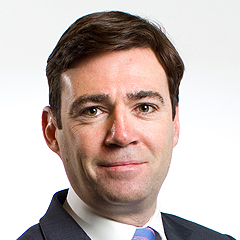
Paul Holmes is the Conservative MP for Hamble Valley, and has been an MP continually since 12 December 2019. He currently undertakes the roles of Opposition Whip (Commons), and Shadow Parliamentary Under Secretary (Housing, Communities and Local Government).
Housing, Communities and Local Government: Family Voting
“Thank you, Mr Speaker, and happy Easter. Family voting is just one example of unfair voting practices that seek to skew elections and exploit those isolated from wider British society. Another example of these divisive tactics was a disgraceful Green leaflet in the Gorton and Denton by-election, written in Urdu, saying: “Labour must be punished for Gaza… Give the Muslims a voice. Vote Green.” If the Minister agrees that this is divisive language, will she back our amendment to allow election literature in a short campaign to be printed only in an official British language?”
Spoke in 7 debatesAsked 66 questions
Running Government
Foreign Interference in UK Politics
“I thank the Minister for advance sight of her statement, and Philip Rycroft for his review. On Second Reading of the Representation of the People Bill, we Conservatives reaffirmed our support for measures to tackle foreign interference, in the light of growing threats from China and other hostile actors. However, we have expressed our concerns about the lack of proper consultation on the detail of the proposed measures, and the lack of engagement with political parties on changes to the law affecting political parties. The Bill should have been introduced after the Government’s response to the Rycroft report, rather than being hastily amended halfway through. The integrity of our democratic system is fundamental to public trust in politics. Every political party represented in this place has a shared interest in ensuring that foreign interference, illicit finance and attempts to undermine our democratic processes are prevented—well, almost every political party. [Laughter.] I thought Labour Members would like that. However, while we support the objective of protecting British democracy from foreign interference, we have significant concerns about both the process that the Government have adopted and several of the proposals emerging from the review. First, the Government immediately accepted—with retrospective effect—a moratorium on cryptocurrency donations and a £100,000 annual cap on donations from overseas electors, yet those decisions were announced without any meaningful consultation or engagement with political parties. That is particularly disappointing because questions of party funding have traditionally been approached through dialogue and cross-party discussion. Such conventions exist for good reason: rules governing political competition should command broad confidence, and should not be changed unilaterally by whatever party happens to be in government. The breakdown of these long-standing conventions should concern all parties, regardless of their political perspective. If Governments begin introducing retrospective and highly partisan changes to the rules of political finance without consultation, we risk creating a precedent that future Administrations may follow. Parliamentary questions have shown that there has been no engagement with the House of Commons—with the Committee on Standards, the registrar, or the Parliamentary Commissioner for Standards—despite changes directly relating to the registration of donations by Members, and despite this House’s code of conduct. Yet again, the Government are making announcements, such as changing the policy on a cap on donations and changing the rules on candidate donations, with zero consultation. Without stepping into matters that are the remit of the Parliamentary Commissioner for Standards, I note that it is already the case that newly elected MPs are supposed to declare gifts and donations that they received in the past 12 months. There also appears to be uncertainty about the scope of the new requirements relating to candidate donations. It is not yet clear which categories of elected officials the provisions will cover, and I would be grateful if the Minister could clarify that. What assessment has been made of the impact of the new profit test on the ability of all political parties to undertake sponsorship and advertising at their party conferences? Have the Government properly considered with the Electoral Commission the interaction of the new requirements with the proposed draft guidance on sponsorship? Does the Minister think that a company sponsoring a lounge or a lanyard is foreign interference? Had the Government engaged fully with political parties, electoral administrators, compliance professionals and other stakeholders before announcing their response, many of these practical difficulties and unintended consequences could have been identified and addressed at an earlier stage. To be clear, we support measures that genuinely strengthen the resilience of our democratic system. We recognise the risks associated with cryptocurrency donations and agree that safeguards are necessary. We also support tighter rules governing donations in the period immediately before elections. However, good policy requires more than good intentions; it requires engagement and a willingness to listen to those responsible for implementing the rules. The protection of our democracy is too important to be pursued through retrospective legislation and measures whose practical consequences have not been fully thought through. Unfortunately, this is a Government who talk about defending democracy while trying to cancel local elections for two years in a row; who amended the electoral system for mayors for partisan advantage; and who changed the laws on election pilots in complete secrecy. They are now gerrymandering local government boundaries. The official Opposition will work constructively with the Government to defend the national interest from foreign interference, but Ministers would be wise to step back from US-style, hyper-partisan legislation, and actually learn to consult.”
Spoke in 30 debates1 APPG role
In Parliament
Selected from their parliamentary record
SPONSOR
Children Not in School (Registers, Support and Orders) Bill
Private Member's Bill · 1st reading
VOTED NO20 Jun 2025
Terminally Ill Adults (End of Life) Bill
Commons division
VOTED AYE8 Jan 2025
Reasoned amendment on Children's Wellbeing and Schools Bill