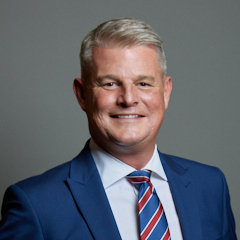
The Rt Hon Stuart Andrew is the Conservative MP for Daventry, and has been an MP continually since 6 May 2010. He currently undertakes the role of Shadow Secretary of State for Health and Social Care.
“I begin by welcoming the Secretary of State and the Under-Secretary of State for Health and Social Care, the hon. Member for Birmingham Edgbaston (Preet Kaur Gill), to their places. The Secretary of State was in the Treasury when it imposed VAT on compassionate access medicine programmes, which provide some patients—especially children with cancer—with a vital last chance to access treatment. The policy has already led to the closure of one scheme. Will he now commit to abolishing this tax before any more follow suit?”
Spoke in 32 debatesAsked 93 questions
Arts, Media and Sport
National Maternity and Neonatal Investigation
“I thank the Secretary of State for advance sight of his statement, and I thank Baroness Amos and her team for their compassionate work. As I said last week, I pay tribute to the women and families who gave evidence and to the babies at the heart of the inquiry. Many revisited the most painful moments of their lives after years of fighting to be heard. Their courage places a responsibility on us all. Last week, the House confronted Donna Ockenden’s devastating findings in Nottingham. Today we face the wider national picture. Successive investigations expose the same failures: women dismissed, deterioration missed, staff silenced, inequalities unchallenged and leaders failing to learn. The problem is no longer a lack of evidence; it is a failure to act. Donna Ockenden said this morning that, sadly, so much in this report is stuff that we already knew. She also raised concerns about waiting until December, and I welcome the fact that the Secretary of State has just announced some of the work. She also said that no commissioner alone can fix a system needing action from every level from the Secretary of State right down to every ward. Donna Ockenden commands enormous respect and we should all listen to her, because she is right. When will the Leeds and Sussex reviews produce their reports, and how will Ministers act on concerns before they conclude, so that families in those areas can see the change that they need as soon as possible? Families should not have to keep proving the scale of harm. Their testimony must now lead to action. The Birth Trauma Association says that the report has overlooked serious injury to women and brain injury to babies, so will the action plan address those harms, and how will families shape and scrutinise it? We welcome the work beginning immediately on triage, discrimination, staffing and urgent estate risks. This is so important, and we must get on with that work, but families cannot wait until the end of the year for the wider plan. Those expecting babies now need reassurance about what will change and when. So many must be anxious, and we need to do all that we can to reassure them. The new triage standards will be published this week. By when must every trust meet them? Will the Secretary of State commit to update the House, by oral or written statement, on trust-by-trust progress? Will the estates funding include accommodation for parents close to neonatal units so that families are not separated from their critically ill babies? We do not oppose a statutory maternity and neonatal commissioner, but Ministers must be clear about the role’s purpose, powers and accountability, because just one person cannot bring the change that is needed; local leaders have a responsibility too. When will the commissioner be appointed, and what will they be able to compel trusts, regulators and national bodies to do? How will local leaders be held accountable when care remains unsafe? The additional midwifery posts are welcome, but temporary roles are not a sustainable workforce plan. Donna Ockenden has warned of rota gaps and of staff leaving obstetrics and midwifery. The 10-year workforce plan has been promised, delayed and pushed back repeatedly. When will it finally be published, and will it provide the permanent workforce that these recommendations require? With women having babies later and pregnancies becoming more complex, how will those at higher risk receive early specialist care? I agree with the Secretary of State that the culture has to change. Listening to women is a clinical duty, not a courtesy; as I said last week, it is at the core of our safety issues. When concerns are dismissed, warning signs are missed, and mothers and babies are put at risk. That duty must apply equally in respect of every woman. A woman’s safety must not depend on her ethnicity, first language, disability, income or ability to fight through the system. As I said last week, both to the House and to the Secretary of State privately, I want us to work together constructively. Where the Government act with the urgency that the report demands, they will have our full support. We all have a duty, and ours is to support these changes. Women and families will not judge today by new structures, promises or another report. They will judge it by what happens when a woman says that something is wrong. Is she heard? Are warning signs acted on? Is senior help available when needed? Are maternity units safely staffed? Can staff speak without fear? Do families receive honesty and compassion when harm occurs? Are fewer mothers and babies coming to harm? When decisions are taken, will they be fully explained? The evidence has been gathered. Families have told their stories. The system has been warned. Now it must change.”