FAQsTermsPrivacyContact
State Logo
StateConstituenciesRepresentative
Back to Tonbridge
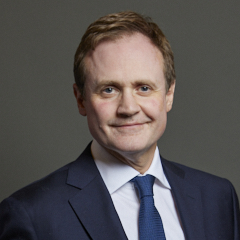
Tom Tugendhat

Tom Tugendhat

Conservative MP for Tonbridge

The Rt Hon Tom Tugendhat is the Conservative MP for Tonbridge, and has been an MP continually since 7 May 2015.

Share
Website

Seat status

Very safe

Percentage of votes

22.19%

Recent swing

-24.0% Conservative

Party

Conservative

Top donors:

Michael Tory (£38,000)

Celestine Management Limited (£25,000)

Hudson Institute (£16,094)

Share donors

Explore what Tom is advocating for

Filter by topic

Benefits and Jobs

Pension Schemes Bill: Clause 2 - Asset management

“I am grateful to be called to speak in this debate. Sadly, it reflects the interests of Members that so few of us are here for a debate about one of the most important elements affecting the future of our constituents, friends, neighbours and, in fact, ourselves. Pensions are rather more than just a savings scheme; they are the thread that binds generations. They are the remarkable invention of our ancestors, who found a way to make sure that the energy, innovation and force of the young could be tied to the assets, education and experience of the old. It is that bond between generations that makes pension saving so special. While I welcome much of what this Bill does, I fully align myself with the points made by my hon. Friend the Member for Faversham and Mid Kent (Helen Whately) about mandation. In that one small area, this Bill repeats an error that was made nearly 30 years ago when the Government, for very understandable reasons—it was a very tense moment in pension savings, just after the Mirror Group Newspapers scandal and the Equitable Life scandal—took upon themselves powers, which were entirely reasonable at the time, to de-risk some of the private pension market. That de-risking was about moving savings, very gently at the beginning, from equities into bonds. In the early days, that did not make much of a difference. It took the percentage of bonds in investment portfolios from 19.1% to 19.3%, and so on. However, although the intention was to de-risk very slightly, the accumulation of time means that the bond element of pensions has grown, so that in the UK the figure is now roughly 60%, whereas in Australia or Canada, which are similar economies, it is roughly 20%. That is a real problem not just because it means pensioners are getting a lower return—they are getting a return based on the debt of the country, not on the energy of young people—but because young people are not getting the energy or the lifeblood they so vitally need when they are starting their lives. Let us look at the difference between equities and bonds. The truth is that bonds are fundamentally dead money: they are money taken or held by the state in ways that pay back over five, 10, 15, 20 or more years—in fact, a couple of times, over 100 years. Equities are fundamentally different. It is true that they are not predictable and it is also true that they do have risk, but they are a bet on the energy of the young people in our community. They are that bond or ligature between generations that fundamentally makes a community strong, rather than tearing it apart. Over the past 20 to 30 years, we have seen those bonds erode. What is the result? A slower growing economy. Why? Because there are no assets to invest. There is no water for the crops, if you like; there is no fertiliser for the soil. What else have we seen? Young people have been moving away because they do not have the opportunity to start their business, or when they do start their business, they do not then have the opportunity to go to the next stage. We see an amazing start-up culture here in the UK, but immediately they hit series A and B, people go to America—they go to California or to a Delaware corp and get foreign money. Again and again, that is happening because the state, for very understandable and entirely principled reasons, made a decision to take authority off savers in order to protect them, and I am afraid that that is what the Minister is doing again today. I understand the Minister’s point. I understand why he feels he needs to take that power. He feels that the Government have a role in ensuring that pensioners get a better deal. I get that. He also feels that the best way to do that is for the state to exercise its authority over a market system. Again, I understand that. But the problem he has is a fundamental one: the only way we achieve the connection between generations and communities, and the only way we get that life flow of the living blood of an economy— the equities market—rather than the dead hand of the state through the bonds, is in a free market. By putting his hand on the tiller and his finger on the scales, he is changing that, and that incremental change over time will do much greater damage than he fully appreciates today, despite his best intentions and despite the intentions of the Bill. That is why I will not be supporting the Government today.”
Spoke in 13 debatesAsked 44 questions

National Defence

National Security (State Threats) Bill

“I am grateful to be called. I welcome the Minister to her place. It is a great job—I enjoyed it, and I have no doubt that she will, too. Though she may have shorter fingernails at the end of the day than she started with, it is worth it for the opportunity to serve with some of the finest people in our Government. The intelligence services and the police that she will be working with are truly exceptional, and it is worth putting on the record the gratitude of the whole House for what they do. Yesterday was the 10th anniversary of the death of my friend Jo Cox, and many of us have been wearing white roses in memory of her. When we last met, Jo and I were in one of the Committee rooms working on a report together entitled, “The Cost of Doing Nothing”. What we were talking about in that report was the action in Syria, the way in which the extremism in that country had torn it apart and how we had not acted in ways that we felt we should have done. I welcome very much what the Government are doing today, because they are demonstrating another response: they are not willing to stand aside and watch as the country gets torn apart in different ways. I will make criticisms in a moment, but I would first just like to place on the record my gratitude for the way in which the Government have approached this legislation. I agree with the broad sweep of it; I just wish they had given it a little bit more time, and I understand that the Minister will almost certainly agree with me. Unusually, I would like to praise the hon. Member for Leeds South West and Morley (Mark Sewards). He made an absolutely outstanding speech and spoke brilliantly, not just for this whole House but for the country, on the threat to a particular community, which is actually a threat to us all. It is absolutely true that in too many ways the Jewish community are the canary in the coalmine of any society. When we see Jews under threat, when we see Jewish homes frightened, when we see Jewish sites vandalised—as sadly we are seeing too much—we know what is coming, and what is coming is not pretty. But let us get back to the Bill because, while it is welcome, it makes that tragic error that we often make in this place—I know we made this error in our time as well—which is to seek the rapid answer rather than the complete one. In doing so, the Bill misses very slightly the challenge that is bound to come, because I am afraid that we do know what will come. By the way, I will no doubt support the Minister when she decides to use the powers, because she will be well advised by the teams we both know so well, but we know that when an organisation is designated, it will lawyer up, go to court and challenge her, and we will find ourselves going around the houses. This is where I confess a failure of my own. One of the organisations that I sought to work on was the Islamic Centre of England. That organisation has the same connection to Islam that Christian organisations that claim the crusader cross, and that far-right baggage, have to the church of Christ. Let us be absolutely clear: it is a vile political organisation dressing itself up as a religious movement—there is nothing religious about it all—yet that organisation enjoys charitable status, as my hon. Friend the Member for Harrow East (Bob Blackman) identified, and sadly, despite irregularities in its business and the way that it operates, it is still able to operate. Let me list a couple more such organisations. Darul Hikma has praised Qasem Soleimani, the late head of the IRGC, whose death is certainly not mourned here, and it praised 7 October and the IRGC. The Abrar Islamic Foundation has praised Hezbollah and Hamas, and has run antisemitic and homophobic events. There are also the Ahl al-Bait Society Scotland—sadly, this reaches across the whole of the United Kingdom—Ahlulbayt Islamic Mission and Al-Ikhlas. They have all run, in various different ways, sessions praising the IRGC and supportive of Qasem Soleimani, which is entirely against not just the interests of the United Kingdom, but very particularly the interests of the Muslin community in the United Kingdom. Let us be absolutely clear about what the natural consequence of this will be: it will stir up sectarian and religious hatred. As the hon. Member for Leeds South West and Morley mentioned, we are first seeing the effect in the Jewish community—of course we are—but we all know where this will lead. There are those of us who value all communities in our society, as I know the Home Secretary does, and who want Islam treated exactly the same as any religion. I think we Catholics are the only ones who are still lawfully discriminated against, but given that that excludes us only from the monarchy, I think we can be pretty comfortable with our position. Those of us who want to see all religions treated equally know that we simply cannot have poison poured into a few ears and pretend that does not happen. I mentioned PressTV today, as well as the vile rumours being spread about the Prime Minister and others by Russia Today, among others, to show that we need to be conscious of what we are dealing with. Let us be quite clear: this is not a freedom of speech issue. This is no more a freedom of speech issue than the invasion of a hostile army is a right-to-roam issue. This is fundamentally about the deliberate actions of a state organisation—either the Russian, Chinese or Iranian state—to undermine us and tear us apart.”

Spoke in 26 debatesAsked 6 questions1 APPG role
Share advocacy

Key Parliamentary Votes

See where your MP stands on these issues

VOTED NO4 Sep 2025

House of Lords (Hereditary Peers) Bill

✓ Passed — 336 For, 77 Against

VOTED NO9 Mar 2026

Children's Wellbeing and Schools Bill

✓ Passed — 307 For, 173 Against

VOTED NO10 Mar 2026

Courts and Tribunals Bill

✓ Passed — 304 For, 203 Against

Where Tom fits into things

Sir Keir Starmer

Sir Keir Starmer

Prime Minister

Tom Tugendhat

Tom Tugendhat

Conservative MP for Tonbridge

Surgeries

Monthly in-person, occasional online

Examples of successful citizen influence

  • Coordinated constituent emails leading to parliamentary questions
  • Local campaign prompting a public statement

Pressure that tends to influence

  • High volume constituent contact
  • Media attention on local issues
  • Cross-party committee pressure