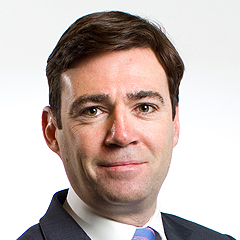
Wendy Chamberlain is the Liberal Democrat MP for North East Fife, and has been an MP continually since 12 December 2019. She currently undertakes the role of Liberal Democrat Chief Whip.
“I associate myself with your remarks, Mr Speaker, and the remarks by the Leader of the House and the shadow Leader of the House of both congratulations and condolences. On the business the Leader of the House has announced, I have to say that I am very disappointed that it means the Deputy Prime Minister’s remarks yesterday to my hon. Friend the Member for St Albans (Daisy Cooper) about the Hillsborough Bill were not accurate. I hope we will see it return after the summer recess. On the world cup, all I will say is that, like fellow Scots, I am probably looking for my Viking helmet at the moment. We all know that the former Member for Clacton’s resignation is nothing but a stunt designed to distract the country from the raft of allegations facing him and, it increasingly appears, his colleagues. Such allegations must be fully investigated, so that voters have all the facts about the candidates they are voting for, whether they be a bin or a politician who sees being a Member of Parliament as a part-time job. Now that the writ has been moved, does the Leader of the House share my regret that the Parliamentary Commissioner for Standards investigation into the former Member for Clacton must pause? Does he agree that, in circumstances where the nature of an allegation is sufficiently serious, there is merit to it continuing, even if the Member is no longer an MP? Does he agree that it could and should continue regardless? Obviously, those of us on the Liberal Democrat Benches wish Count Binface well. It was interesting to read overnight that the right hon. Member for Makerfield (Andy Burnham) has plans for changing the culture and narrative of the Labour party. I am sure those on the Government Benches are looking forward to that new-found freedom. But for all the talk of collaboration and modernisation, we still do not know anything about the legislation that the new Labour Government are planning to bring to the House. We know more about the right hon. Member’s love of guitar and rugby league than we do about his plans for fixing the problems facing the country. The Liberal Democrats would welcome detail on his plans to fix social care, tackle the special educational needs and disabilities crisis and support the small businesses bearing the brunt of the Government’s jobs taxes. Will the Leader of the House commit to doubling the length of Prime Minister’s questions next week, and give the Prime Minister-in-waiting the opportunity to answer questions and outline his views on the issues that really matter?”
Backed 2 motionsSpoke in 28 debatesAsked 4 questions
Benefits and Jobs
Pensions Update 29 January 2026 on the PHSO Report Response
“I agree with the hon. Member, and it is important to remember that on many occasions we are talking about our most vulnerable constituents. No doubt there is an onus on us as MPs, and indeed on the Government in Westminster, but Administrations in other parts of the UK also have a responsibility to ensure that they are working as constructively as possible. I understand that the Department has recently recruited more complaints handlers, which I hope will go some way to improving things. I have a case that we raised in March, and we were told this week that it has not yet been assigned to anyone. I am deeply concerned about the state of the DWP, and by extension the welfare of the vulnerable constituents who the hon. Member for Strangford (Jim Shannon) just referred to. There are two key issues with the carer support payment that the DWP needs to help address. First, DWP staff need to be trained in what that payment is, how it works, and why keeping the underlying entitlement to it is important. That includes early stage call handlers, in addition to the specialist teams to whom difficult cases are allocated. I hope that the Minister, and the Minister for Social Security and Disability, are fully across this, but let me put on the record that the carer support payment is the benefit that replaced carer’s allowance in Scotland—we know there have been major issues with carer’s allowance in other parts of the UK. Like carer’s allowance, earnings over a certain level remove someone’s eligibility to the payments. Carer support payment can also be awarded as an underlying entitlement that acts as a gateway for additional support. That should be a familiar concept. We see it with the DWP carer’s allowance, but also with other support such as child benefit. Parents are encouraged to apply for child benefit even if they are not eligible for the payment, because it is a gateway to the non-working parent getting national insurance credits. Madam Deputy Speaker, you can imagine how frustrating it is when DWP case handlers give advice, as they have done to us, that the issue with deductions would be resolved by asking Social Security Scotland to remove the underlying entitlement. It fails to demonstrate any understanding of how many benefits work, and frankly demonstrates a willingness to let people be worse off because the DWP’s own rules are complicated to apply. Secondly, DWP systems need to be set up to process correctly the information being provided to them by Social Security Scotland. I will not claim that Social Security Scotland is perfect by any stretch, and it is not within the purview of this place, but I would like to see more joined-up working from all sides. However, I have been assured, as much as I can be, by Social Security Scotland that its computer system is communicating properly with the DWP, and I have no reason to believe otherwise. However, from the DWP side I have been varyingly told that its system shows a claimant in receipt of a payment of carer support payment, despite them never having received it, and that it is DWP policy to deduct carer support payment as standard unless explicitly told otherwise by Social Security Scotland. Worryingly, while acknowledging an issue in March, the Minister for Social Security and Disability told us in writing that wrongful deductions “may cause confusion to customers and that they are exploring ways to make the process clearer”. My view is that yes, DWP mistakes can be confusing, especially given the communication issues that I have already outlined; but that statement misses the point by stating the problem is the claimant’s understanding. We need a system that does not make these systemic errors in the first place, and I would argue that that is very squarely for the Department, not claimants, to sort out. Just finally last week, the specialist DWP complaints team has either worked out, or come clean with us and owned up to, the systemic error impacting many Scottish carers. It wants to find a fix, but it does not have a timescale in which that will be achieved. Until then, it will be up to a claimant to realise that there is a problem and ask the DWP to correct the deduction each month. Let me repeat that: the DWP wants the claimant to ask the DWP to correct the deduction each month. We all know that unpaid carers are among the most overstretched groups in our society, yet the DWP is telling them to take on the burden of correcting its failures every single month. Carers Week is next week, and I do not think that that is the message that we want to be sending from this place, or indeed from the DWP. That may all sound a bit dry and complicated, but benefit applications, overlapping payments and underlying entitlements have a real human impact on the lives of our constituents. Having their universal credit payment reduced to nil when they have food to buy and bills to pay is very difficult. There is no buffer to help them out while they battle with the DWP to find out why. I have seen constituents relying on credit cards for basics, or going without, to the detriment of their own health. The stress and distress that this situation causes are immense. The DWP’s computer error is the reason one constituent has been suicidal, and it is causing extreme anxiety to another. They are not alone, and fundamentally this is not their fault. I will make a final addition to my remarks before I come to a conclusion. I had mainly prepared for this debate when we received an update this morning on one of the cases. My constituent had received a letter saying that he would be receiving a back payment of the best part of £3,000. He was confused—we were confused. My office had spelled out as clearly as it could to the DWP that he just needed his universal credit paid back for the period of December 2025 to February 2026, in which carer support payment had been incorrectly deducted. Being given a confusing payment of too much money can be just as distressing as receiving too little. I cannot stress enough the fear of relying on the DWP, spending the money and then being told that it has to be repaid—I am sure that we all, as constituency MPs, recognise that. As it turns out, the DWP had got it wrong again. Despite everything it had been told, despite the months of investigating the claim, it thought that my constituent had never received carer support payment, which he had until December, and had repaid him for the whole period of the deduction. Now a further investigation has to be carried out, and then my constituent will have to pay back more than two thirds of what he has just been paid, so he needs to keep that money until then. I am sorry, but I find that unacceptable. What on earth is going on? My constituents spotted the problem, came to my office and after months of back and forth we have understood it, but there are more than 30,000 carers across Scotland who have this underlying entitlement and could be missing out on universal credit as a result. It has been a battle to get to where we are today, and I would not be surprised if many carers in Scotland gave up their underlying entitlement to this payment if they were told by the DWP that that was the best thing to do—but there are consequences to that decision. I therefore hope the Minister can use his time to set out what the Department is doing to ensure that its staff properly know about and understand Scottish benefits. What engagement is the Minister’s Department having with the Scottish Government to ensure that we can get working together? As the hon. Member for Strangford (Jim Shannon) said, how will the Department ensure that that happens on a UK-wide basis? What is the current understanding of the underlying error? What steps are being taken to fix it? What will the timescale be for that? Crucially, what steps are being taken to identify carers who are being underpaid or wrongly advised to drop their entitlement, and to offer proper support while those errors are rectified?”
Signed 2 open lettersSpoke in 10 debatesAsked 17 questions