FAQsTermsPrivacyContact
State Logo
StateConstituenciesRepresentative
Back to Hereford and South Herefordshire
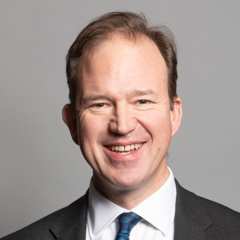
Jesse Norman

Jesse Norman

Conservative MP for Hereford and South Herefordshire

The Rt Hon Jesse Norman is the Conservative MP for Hereford and South Herefordshire, and has been an MP continually since 6 May 2010. He currently undertakes the role of Shadow Leader of the House of Commons.

Share
Website

Seat status

Marginal

Percentage of votes

2.81%

Recent swing

-29.1% Conservative

Party

Conservative

Top donors:

Franco-British Colloque Ltd (£1,125)

Istituto Bruno Leoni (£543)

Share donors

Explore what Jesse is advocating for

Filter by topic

Business and Trade

Business of the House

“What a sporting week this has been! Youth, vitality, incredible physical stamina in the most testing of environments—and that is just the Leader of the House, whose birthday it was yesterday. He has never begrudged me my own naivety and inexperience, and I know that everyone present will join me in wishing him a massively happy birthday. In other news, the England football team decisively defeated Mexico at the Azteca, and we look forward with keen anticipation to their taking on Norway on Saturday evening. We send our congratulations and commiserations to the United States of America on the tragic wrong turn it took towards independence 250 years ago. Edmund Burke famously said: “In this character of the Americans, a love of freedom is the predominating feature”. Whatever temporary disagreements we may have, let us never forget this deepest of shared commitments. Kim Jong Un himself would admire the North Korean precision of the Labour leadership vote, which has opened today, with precisely one candidate on the ballot paper. How very different from the forthcoming by-election in Clacton, which appears to be a choice between a novelty comedy act with no real policies, and Count Binface. It is a long time since we had a count in the House of Commons, and when the time comes—as it surely will—we will have to leave to you, Mr Speaker, the delicate question of whether and how to suspend the rules on headgear in the Chamber for the new Member. On a more serious note, the House has already expressed its great sorrow at the recent death of Sir George Howarth. I would also like to draw attention to the very sad death on Monday of James Mackay, Lord Mackay of Clashfern, at the age of 99. He was a brave, energetic and imaginative reformer of the law as Lord Advocate in Scotland, and then as Lord Chancellor. It is hard to think of a man more widely respected in public life. We send our very best to his wife Bett and their family. I have just one item of business today. It is related to the River Wye, which the House will know is not only a particular obsession of mine, but an issue of national importance. When the last Government cancelled the action plan for the Wye, it also cancelled the accompanying commitment to £35 million in clean-up funding, and replaced it with a paltry £1 million, supposedly aimed at research. I was very distressed to receive the news this week that only £115,000 of that £1 million will actually be spent on research, that even that tiny sum will be spent over three years, and that the balance of the £l million will be consumed by administrative costs. Will the Leader of the House instigate an immediate inquiry and ensure that Ministers clarify to me, my constituents and national campaigners on this issue that the full £1 million will be kept intact and used for the purposes for which it was intended?”
Spoke in 89 debatesAsked 3 questions

Science and Technology

Independent Complaints and Grievance Scheme

“No, that is not true. The motions of this House are not traditionally regarded as a form of bureaucracy; in fact, in many ways they cut through bureaucracy, because they allow us to get to a democratically ratified decision very quickly and transparently. The trouble comes when decisions are made without that transparency, simplicity and speed of action, which is what we are opposed to. As I have said, the present proposals draw a distinction between policy and procedure, and would mandate the assurance board to act on its own behalf in matters of procedure. Of course, the board contains only one Member of the House of Commons, and as I have said, that person is nominated rather than elected by the House. In other words, the assurance board potentially has wide-ranging and coercive powers, which are to be exercised almost entirely by people who are outside any direct framework of democratic accountability. It potentially has the power to overturn decisions that are ultimately made by an MP’s constituents at the ballot box. The House has rightly been concerned about the exercise of such powers for at least 400 years. The motion, too, draws a distinction between policy and procedure. Of course, contrary to the suggestion that has been made, procedure includes important substantive matters. Indeed, Paul Kernaghan’s review set out an illustrative table of potential changes, which included changing whether somebody may be accompanied to an ICGS interview. As I have pointed out, this is an issue of powers as well as procedure; the assurance board has the ability to empower people who are under review by the ICGS to bring another person along to an interview, or to prevent them from doing so. In turn, this reflects a tacit or explicit policy decision about what may be fair or just under the circumstances. It is not simply a matter of procedure. Mr Kernaghan’s review also included, as an illustration of what he called procedure, changing the timing of when the Parliamentary Commissioner for Standards is notified of a misconduct complaint—whether that is before or after an initial assessment. Of course, that too reflects a tacit policy judgment about what a just process would be. Such tacit policy judgments show that there is no hard and fast distinction to be drawn between policy and procedure, and underline that these are not matters for officials—for unelected people—but for Members of this House acting through this House. I remind the House that the ICGS sets rules not merely for members of Parliament, but for more than 15,000 passholders, and even—although this is slightly unclear, and in my judgment has not properly been resolved—for tourists and visitors to the Palace of Westminster. It is not accountable to any other body. Today’s decision to reject amendment (e)—of course, we are not moving that amendment, so that will be the decision—will be a one-off decision to give up powers of scrutiny, and it will be hard, if not impossible, to reverse that, once those powers are yielded. This is happening at a time when more and more decisions are being taken by people who are not accountable in any direct, genuinely democratic way, through the emergence of what people have often thought of as a kind of bureaucratic or legal sludge. That is absolutely deplorable. All that we in the Conservative party have said is that any decision of this type that is taken by people who are not Members of Parliament should be placed before this House, in line with its constitutional status and the Bill of Rights 1689. It has always been our procedure in this House not to recognise a superior, let alone a bureaucratic or non-democratically elected superior, and we should not do so on this occasion.”

Spoke in 4 debates
Share advocacy

Latest from Jesse

Recent posts pulled from their website

Jesse Norman pays tribute to Ann Widdecombe and marks change in PM

Blog · 17 Jul 2026

Jesse Norman condemns Government U-turn on Opposition Day as after push to delay recess for Burnham scrutiny

Blog · 14 Jul 2026

Jesse Norman criticises Government for short notice tabling of Public Office (Accountability) Bill

Blog · 13 Jul 2026

Key Parliamentary Votes

See where your MP stands on these issues

VOTED NO4 Sep 2025

House of Lords (Hereditary Peers) Bill

✓ Passed — 336 For, 77 Against

VOTED NO9 Mar 2026

Children's Wellbeing and Schools Bill

✓ Passed — 307 For, 173 Against

VOTED NO10 Mar 2026

Courts and Tribunals Bill

✓ Passed — 304 For, 203 Against

Where Jesse fits into things

Sir Keir Starmer

Sir Keir Starmer

Prime Minister

Jesse Norman

Jesse Norman

Conservative MP for Hereford and South Herefordshire

Surgeries

Monthly in-person, occasional online

Examples of successful citizen influence

  • Coordinated constituent emails leading to parliamentary questions
  • Local campaign prompting a public statement

Pressure that tends to influence

  • High volume constituent contact
  • Media attention on local issues
  • Cross-party committee pressure